Tag Archives: Pierre Gervois

Tyron Cutner, NYC famous fashion adviser joins the Shanghai Travelers’ Club magazine

Tyron Cutner - Shanghai Travelers Club - Mens Fashion EditorThe Shanghai Travelers’ Club magazine, China’s leading luxury travel magazine for High Net Worth global Chinese travelers, launches a new monthly regular section about Men’s Fashion.

“As Chinese entrepreneurs are becoming more and more international, they are more attentive to their personal style while in business meetings or in corporate events” said Pierre Gervois, Publisher and Editor-In-Chief.

The newly appointed Men’s Fashion Editor, Tyron Cutner, will be in charge of this new editorial feature.  An expert in men’s fashion, Tyron Cutner is a well known fashion adviser in New York City and will bring his expertise and style to the publication.

“I feel proud to be part of the prestigious Shanghai Travelers’ Club magazine. Every month, we’ll share with our Chinese readers the latest trends in Men’s fashion and accessories, as well as the basics that every international gentleman must have in his suitcase when traveling”, said Tyron Cutner.

Banner Advertisement - Gervois Hotel Rating - May 2017 campaign featuring Pierre GervoisEvery month, starting in September 2015, the Shanghai Travelers’ Club magazine will feature a section providing fashion advice for the modern, style conscious, Chinese businessman.  Wether he’s attending a negotiation meeting in New York City, at a Charity ball in London, or attending a gala dinner in Paris.

According to a survey by China Elite Focus, 74% of Chinese male entrepreneurs and top executives aged 30 to 45 agree that paying attention to their personal style has a positive impact in conducting business.  And a staggering 81% think that they receive a “Disappointing” or “Very disappointing” welcome when shopping in the United States.

“It’s also important that fashion brands realize that they need to substantially improve the way they interact with affluent Chinese customers in the United States. We hope that this new editorial content will encourage U.S. retailers to implement long awaited changes in the customer service towards Chinese travelers”, Pierre Gervois added.

The Shanghai Travelers’ Club magazine is a China Elite Focus Magazines LLC publication withg offices in Hong Kong, Shanghai and New York City.

Leave a comment

Filed under New York

The Shanghai Travelers’ Club magazine goes monthly

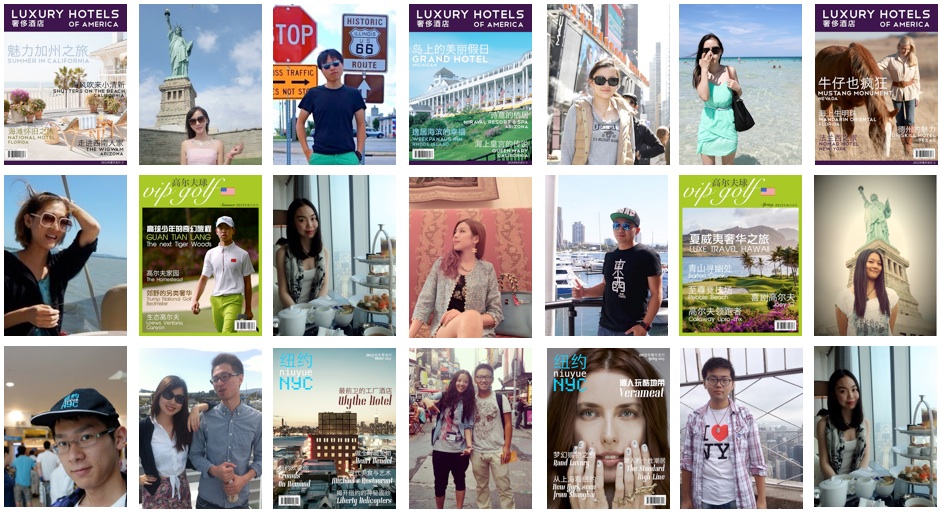
Shanghai Travelers' Club Spring 2014 coverPublished by China Elite Focus Magazines LLC (New York City), the Shanghai Travelers’ Club magazine has been launched in 2012 as a quarterly magazine in Chinese Mandarin language, featuring a sophisticated content about luxury hotels, lifestyle, private aviation and profiles of famous entrepreneurs.
Considered to be one of the finest luxury travel publications, the Shanghai Travelers’ Club magazine has been a leader in introducing a vision of understated luxury travel for the new generation of high net worth Chinese world travelers.

Read and trusted by 50,000 Chinese frequent travelers, this magazine is considered by its readers as a trusted and independent voice, publishing stories of uncompromising quality about the finest international travel experiences.

Starting with the April 2015 issue, published on March 20, 2015, the Shanghai Travelers’ Club becomes a monthly publication. Featuring 40% content about the United States, #1 destination for wealthy Chinese travelers, this publication is the most influential travel magazine reaching Chinese frequent travelers.

“Going from quarterly to monthly is an amazing achievement for our editorial team” said Pierre Gervois, CEO of China Elite Focus Magazines and Publisher of the Shanghai Travelers’ Club magazine. “We have been working on this project for six months, due to the success of the magazine and the constant demands from our readers to have more content. We had to expand our editorial team at our Shanghai office, under the direction of Elaine Ke, our Senior Travel Editor” added Pierre Gervois.

With an office in Shanghai and in New York City, the now monthly Shanghai Travelers’ Club magazine will consolidate its position as a leading travel & lifestyle media, targeting the world’s most affluent consumers.

Leave a comment

Filed under Uncategorized

From Hipster To Horseback: According to Pierre Gervois, Publisher of Luxury Hotels of America magazine, Chinese Luxury Travelers Demand Authentic Experiences

Pierre Gervois, Publisher Luxury Hotels of America - China Elite Focus

Pierre Gervois, Publisher of Luxury Hotels of America, New York, October 2014

As China’s outbound tourist market rapidly expands, high-end hotels and retailers across the world are vying for the business of this important group. In the United States, one company on the front lines of this trend is China Elite Focus, a New York-headquartered, Chinese-language publisher that has been producing luxury travel magazines for Chinese readers since 2008. With content focused on destinations, hotels, cuisine, retail, and philanthropy, the magazines were created to meet demand by moneyed Chinese travelers for content on authentic, upscale experiences.

In order to learn more about how China’s luxury outbound travel market has evolved over the past six years, we talked to China Elite Focus CEO and Publisher Pierre Gervois about the changes he’s seen in Chinese travelers’ taste. Read below to hear his thoughts on Chinese travelers’ interest in getting a taste of American culture, the decline of the Chinese “100 percent shopping trip,” and how this fall’s Golden Week fared for U.S. luxury businesses.

What inspired you to start China Elite Focus?

In 2008, after having served as the president of a consulting company specialized in foreign investments in China, I decided to start a new publishing company and to publish high quality luxury travel magazines in Chinese Mandarin. A lot of my Chinese friends complained to me that they could not find any publication in Chinese language with curated and sophisticated content for their outbound travels. So our mission, from the beginning, was to bring to them beautifully written travel stories about the world’s most spectacular and exclusive experiences. I’m very proud of the job we have done with our team of very talented travel editors, lead by our Senior Travel Editor, Elaine Ke. Today we publish there magazines: the Shanghai Travelers’ Club, Luxury Hotels of America, and American Philanthropy.

How is the content of your magazines tailored to a Chinese audience?

All the content of our publications is written at our Shanghai office by Chinese editors. We do not translate from English an existing article; we produce our own original content. We are in constant exchange with our readers through Weibo, and we know what kind of themes or destinations they want to read stories about. For example, we have noted a strong interest for travel to the United States over the past year, and we have increased the stories about luxury travel experiences in the United States.

We’ve been reading a lot about how wealthy Chinese travelers are becoming more interested in “experiential” travel rather than just basic shopping and sightseeing. Have you noticed this trend growing among your readers?

That is true. The time of the “100 percent shopping trips” is done. The new generation of affluent Chinese outbound travelers is now very mature, extremely well-informed, and wants to discover new experiences, off the beaten tracks. We have published stories about horseback riding experiences in the Nevada desert in Luxury Hotels of America which had great success with our readers. Chinese shoppers tend now to plan much more carefully and in a very sophisticated way their shopping plan abroad. They are looking for more limited-edition items of lesser-known brands they have discovered on social media networks, rather that already well-known global brands, who have saturated the market with products over-marketed to Chinese customers.

One of your magazines focuses exclusively on luxury hotels in the United States. Which U.S. hotels are the most popular with Chinese travelers at the moment?

Luxury Hotels of America features in particular historical hotels, or hotels with a connection to the American culture. The kind of U.S. hotels that Chinese travelers like are boutique hotels, lodges, and ranches with a connection to nature and wildlife. We have seen a significant shift from standardized, large-size hotel chains to much smaller hotels offering a personalized experience. In New York City, we have seen that hotels in Brooklyn, built in former factories, in “hip” neighborhoods were a great success with Chinese travelers, as well as properties in the American West, offering a genuine local experience.

How was this season’s Golden Week for luxury hoteliers and retailers in the United States?Gervois Rating Banner 01

We have recently discussed with several well-known retailers in the United States, and they have been surprised by the evolution of the shopping behavior of Chinese customers and their use of social media to compare brands and know exactly where to buy. It was not uncommon for them to see Chinese customers with their iPads and mobile phones texting to their friends about brands and retailers. The digital integration of the shopping experience is now extremely important and mobile payments such as the Apple Pay will definitely be very popular with Chinese shoppers in the United States. Since the beginning, we have integrated our content with social media, and we are very pleased with this trend.

What are some ways in which U.S. luxury businesses are doing a good job of reaching and serving Chinese tourists? What are some ways in which they can improve?

U.S. luxury brands and luxury hotels can do much better! They are doing all right, and have a big margin to improve their relations with Chinese travelers on the three following points:

-No more stereotypes about Chinese tourists. A lot of U.S. hospitality, tourism, and retail companies still create marketing campaigns with the stereotype in mind of group tourists traveling in coaches, staying in cheap hotels, with entirely pre-arranged shopping programs. Most Chinese travelers do not want to travel this way anymore and choose themselves their hotels and their shopping experiences, without the help of travel agencies.

-Chinese travelers to the United States are looking for a genuine American experience. Some U.S. hotel chains have developed programs specifically for Chinese travelers with rooms decorated in a Chinese style, offer Chinese food only, and entertainment programs linked with Chinese culture. This is exactly the opposite of what Chinese tourists really want. They write to our editors and complain with us that they want to find a real American experience in hotels, not a “fake” Chinese experience! They have traveled for thousands of miles to have a taste of American culture and civilization.

-A more sophisticated and thoughtful marketing strategy with Chinese customers. U.S. luxury brands must understand that, in order to sell to Chinese tourists in the United States, they must start to promote and do branding in China, with specialized digital media targeting Chinese travelers planning their trip to the United States. It’s too late and very little effective to promote their brands in printed magazines or tourist guides distributed in airports or hotel lobbies, because the purchase decisions have already been made several weeks ago, in China. Digital native advertisement (sponsored content) is also very effective to create brand awareness. Chinese customers are early adopters of the newest technologies, and old-school marketing does not work and looks “uncool” to them. Social media integration and sponsored content are the two pillars of a successful campaign with Chinese tourists coming to the United States.

Source: Jing Daily

Gervois rating banner 02

2 Comments

Filed under USA

American Philanthropy, new magazine for wealthy Chinese interested to donate to U.S. Philanthropies and Charities

American Philanthropy First Issue CoverChina Elite Focus Magazines LLC, the leading publisher in luxury travel and lifestyle magazines for affluent Chinese travelers, announces the official launch of its latest publication “American Philanthropy”.

“We know that a significant part of our readers of both publications, Shanghai Travelers’ Club and Luxury hotels of America are Chinese businessmen who are currently involved with philanthropies in China and that they are also interested to continue their involvement with charities and philanthropies in the United States,” said the CEO and publisher, Pierre Gervois. “That’s why we felt the need to launch a new publication, focused entirely on philanthropic issues along with curated lifestyle content about the United States.”

American Philanthropy magazine will feature exclusive articles about America’s most influential philanthropic organizations as well as profiles of American Philanthropists. The first issue introduces organizations such as New York Community Trust, National Philanthropic Trust, Bed Stuy’s Project Re-Generation and Graham Windham to highly affluent Chinese businessmen and donors. A renowned New York philanthropist – Nancy Heiser, also vice president of wealth management at UBS Bank, has the honors of the first cover story.

American Philanthropy magazine specifically caters to the new generation of international Chinese business executives doing business with the United States. This publication is available on all platforms such as iPad, web and on China’s most important social media network, Weibo.

“ Chinese business travelers coming to the United States want to have access to sophisticated information and this is not easily available in any Chinese publication or not available at all – until now,” said Pierre Gervois. “This magazine will give them insights on the crucial role of philanthropy in the United States, as well as its connections with politics and business.”

“American Philanthropy offers excellent advertising opportunities for U.S. companies interested in reaching to highly affluent Chinese businessmen planning or already doing business in the United States,” said Janavi Kothari, Advertising Sales Representative of American Philanthropy. “This publication is so far the most targeted magazine published in the U.S. with an unique readership of prominent business owners and top Chinese international executives.”

Leave a comment

Filed under Uncategorized

With China Southern Airlines, more Chinese tourists in New York City

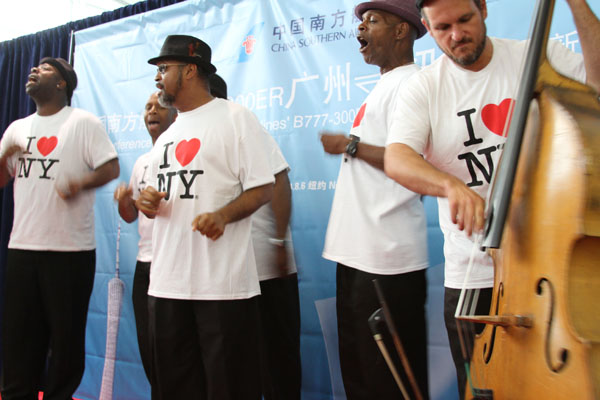
Niuyue Mag - China Elite Focus Magazines LLCIt’s no secret that investment by Chinese businesses in New York has helped both Chinese and US businesses flourish. Now China Southern Airlines and “I Love New York” – New York State’s tourism agency – have partnered up to promote global tourism in New York State. And it should be another shot in the arm for New York’s economy.
Around 1.8 million tourists from China visited the US last year. With an average spending of $3,297 per tourist per trip, they contributed $877 million to New York City’s economy alone, according to Attract China, a marketing company that helps businesses in the US establish an online presence to lure visitors from China.
New York Governor Andrew M. Cuomo announced on Aug 6 that China Southern Airlines and “I Love New York” were launching a partnership to promote New York State for global tourism and business. The partnership is in support of the Governor’s Global Tourism initiative.
The promotion officially got underway with China Southern Airlines celebrating its inaugural direct flight from Guangzhou to JFK International Airport, the airlines’ first ever direct service to the US’ East Coast.
“Collaborating with Asia’s largest airline will make everything that we have to offer more accessible to China’s bustling market, quite literally providing a gateway to the iconic Empire State,” Cuomo said.
“New York is experiencing record levels of tourism in both New York City and Upstate New York, and our administration will continue to foster this surge so that spending by visitors and investment by businesses can continue to grow local economies,” the governor added.
GERVOIS magazine Advertising and sponsored content opportunitiesThe partnership includes training key China Southern Airlines sales staff on New York State tourism highlights, enabling tour operators to offer New York State vacation travel options and collaborating on public relations efforts to promote New York.
China Southern Airlines Chairman Si Xianmin said: “We are thrilled to launch our direct route to New York City and partner with the governor in his initiative to promote Chinese tourism in New York, a state not only boasting epic skyscrapers but also one endowed with natural beauty and resources and one that harbors a culturally diverse and friendly people.”
Empire State Development President, CEO and Commissioner Kenneth Adams said: “This new marketing partnership with China Southern Airlines furthers our efforts to promote tourism across the state. There is so much to see and do in New York and we look forward to welcoming visitors from China to experience all of New York State’s rich history and culture.”
“China Southern Airlines and New York State have goal in common, and that is to get more people to come to New York,” said Gavin Landry, New York’s executive director of tourism.

” About 20% of the readers of Niuyue Mag come from Guangzhou”, says Pierre Gervois, CEO & Publisher of Niuyue Mag, a luxury lifestyle magazine about New York City in Chinese language. ” With this partnership, we’ll see more Chinese tourists in NYC. This is an excellent initiative”.
China Southern Airlines, the third-largest air carrier in the world, now has four direct flights a week from Guangzhou to New York. “China itself is a source market for global tourism,” said Landry, noting that it is on the top five list of countries with the most visitors to New York State.
“As the Chinese economy flourishes, there is a growing demand for travel,” said Landry.
Landry said the number of Chinese visitors coming to New York has been growing. “A million Chinese are already living in the New York City area, the Chinese diaspora provides a great opportunity for tourism as well. People have their relatives and family visiting,” said Landry.
Before the announcement of their partnership with China Southern Airlines, NY’s tourist board offered “Becoming China Ready” workshops to service the Chinese tourism market. The workshops in Albany, Utica, and Rochester were well-attended by the private sector, government agencies, and tourism and hospitality organizations learning how to understand and promote themselves to the Chinese market.
Earlier this year, “I Love New York” established offices in Beijing, Shanghai, Guangzhou and Chengdu.
“I think more Chinese visitors will be a tremendous help to the economy,” said Charles Mon, vice-president of Sino-American Tours based in Manhattan. “More tourists from China will also benefit the cruise industry.”

Leave a comment

Filed under New York

Huson International Media appointed to represent Luxury Hotels of America magazine

LUXURY HOTELS OF AMERICA FINAL LOGOHuson International Media has been appointed by China Elite Focus Magazines LLC as the exclusive advertising sales force in North America for Luxury Hotels of America digital magazine.

Ralph Lockwood, President of Huson International Media, comments, “We are delighted with this new partnership which will allow us to develop the advertising revenues for Luxury Hotels of America. This technology-forward publication leverages the popularity of tablets, smartphones and social media to offer affluent Chinese travelers up to date and comprehensive information about the leading hotels and resorts in the United States. The new generation of international vacationers from China are more independent, and less likely than their predecessors to book packaged tours or use a travel agent, and Luxury Hotels of America is perfectly positioned to reach this audience, as they plan their US vacations. The publication is an ideal addition to our already robust portfolio of international media reaching affluent travelers around the world.”

As Pierre Gervois, CEO of China Elite Focus Magazines and Publisher of Luxury Hotels of America, says “We have chosenLHA 1 Huson International Media as our exclusive advertising sales force in North America because of their proven track record of a leading media representation company. We have been impressed by their professionalism and understanding of the new generation of  independent and affluent Chinese travelers coming to the United States. Working closely with Huson International Media will allow Luxury Hotels of America to increase its advertising revenues with North American advertisers such as hotels and resorts, luxury brands, airlines, entertainment parks and tourism boards.”

Headquartered in Silicon Valley, with locations in California, New York, the UK, Germany, and the Netherlands, Huson International Media has been representing media owners in Consumer, Fashion, Electronics, Computing, Business, and Finance sectors since 1988. With a current partnership line-up of more than 60 media-owners worldwide including divisions of Gruner + Jahr, Reed-Elsevier, Prisma Presse, and News Ltd, Huson International Media is one of the world’s leading media representatives.

Headquartered in Hong Kong, with offices in Shanghai and New York, China Elite Focus Magazines is the leading publishing company specialized in luxury travel magazines for affluent Chinese outbound travelers. With publications such as the Shanghai Travelers’ Club, Niuyue Mag, VIP Golf USA and Luxury Hotels of America, China Elite Focus Magazines provides a high quality content in  international luxury travel and lifestyle to the new generation of sophisticated Chinese travelers.

Leave a comment

Filed under USA

Chinese investors turn to US commercial realty

Chinese businessman - China Elite FocusChinese investors, the second-biggest overseas buyers of US residential real estate, are building up portfolios of US commercial property as they look for new avenues of diversification. Chinese entities announced more than $5.89 billion in projects in January-October, nearly six times the $996 million for all of 2011 and 2012 combined, data from New York-based consultancy Rhodium Group show.
“There is a lot of upside,” said Thilo Hanemann, Rhodium’s research director. “We are at the beginning of a structural increase of Chinese investment in US commercial real estate.”
Greenland Holding Group Co completed a deal that will give the Shanghai-based developer a 70 per cent stake in Forest City Enterprises Inc’s Atlantic Yards, a 22-acre commercial and residential project in Brooklyn, New York. The deal, which is expected to require $4.8 billion worth of investment over eight years, is the largest property transaction by a Chinese company in the US.
China’s push into US property is underpinned by declining investment returns at home, a growing desire by wealthy individuals and developers to diversify their holdings overseas, and property companies looking to capitalize on offshore migration.
“Some investors want to diversify their assets, and some are looking for different growth opportunities,” said Julien Zhang, international director in Beijing for property consultancy Jones Lang Lasalle, which is advising three Chinese conglomerates on property deals. “Others want to learn how to enter mature and developed markets.”
A rebound in US real estate pricing, tight inventory in major cities, and continued low interest rates also are attracting Chinese buyers, said Gary Locke, the US ambassador to China. Locke was speaking at a forum in Beijing sponsored by the US Embassy to promote Chinese investment in US property. Chinese investment in the US has surged to $18.5 billion over the last two years, more than the combined total of the previous 11 years, Locke said.

“Chinese investors are now looking to purchase entire luxury shopping malls in Los Angeles, Las Vegas and New York City”, said Pierre Gervois, Publisher of the Shanghai Travelers’ Club magazine. “As the new generation of affluent Chinese consumers prefer to buy luxury goods overseas, Chinese investors know that it’s now better to invest in luxury retail in the U.S. rather than in China, where foreign brands have opened too many deserted outlets” Gervois added.
Chinese nationals bought more than $8.1 billion worth of real estate in the year ended March 31, representing 12 per cent of the estimated $68.2 billion of domestic property purchased by overseas nationals and second only to Canadians, according to a survey by the National Association of Realtors.
“Real estate is finally becoming a global industry and you will see capital flows on a cross-border basis, just like every other investment class,” said Rob Speyer, co-chief executive of Tishman Speyer Properties LP, which partnered in February with China Vanke Co Ltd to build a $620 million apartment project in San Francisco.
Speyer, whose company is also developing commercial, residential and retail projects in the Chinese cities of Shanghai, Chengdu and Tianjin, said he courted Vanke’s Chairman Wang Shi for more than two years, and inked their deal only 45 days after first introducing the project to him.
Not everyone is convinced that Chinese investment in the US property market will continue uninterrupted. Other options for expansion include Europe, Australia and Singapore, which account for about two-thirds of offshore Chinese real estate investment, according to Jones Lang Lasalle.
Zhang Xin, chief executive of Soho China Ltd, who paid $700 million through her family trust to buy a stake in the General Motors Building in Manhattan, said that while the US regulatory and legal environment remained attractive, valuations were getting expensive. “I would not feel as comfortable today putting in money as I did a few years ago,” Zhang said.

Leave a comment

Filed under USA

Chinese tourists have become the highest-spending overseas visitors to the U.S. and valued customers for U.S. shopping centers and travel industries

Chinese tourists - Chanel store- China Elite FocusMinutes after arriving by bus at an outlet mall in Cabazon, a dozen or so Chinese tourists hustled out to buy luggage that they planned to stuff with high-end clothes, shoes and bags.
But not Guoshing Cui, a Samsung supervisor from Guangzhou. He made a beeline for the Coach store, where he picked out three expensive handbags. He paid more than $800 from a wad of $100 bills.
The bags were gifts for family and friends in China, where Coach goods sell for two to three times the price in the U.S. “It’s a smart move,” he said of his purchases.
That kind of power shopping has made the Chinese tourist the highest-spending overseas visitor to the U.S. and one of the most valued customers for U.S. outlet malls, shopping centers and tour bus operators.
Chinese tourists spend an average of $2,932 per visit to California, compared with $1,883 for other overseas visitors, according to the latest statistics by the U.S. Office of Travel and Tourism Industries. A big chunk of their spending — about 33% — goes for gifts and souvenirs.
“What we know about Chinese visitors is they don’t like to lay on the beaches,” said Ernest Wooden Jr., president of the Los Angeles Tourism and Convention Board. “What they do like is shopping.”
The outpouring of Chinese money helped set a record for spending by foreign visitors to the U.S. — $168.1 billion in 2012, according to federal officials. Los Angeles is getting its share of the Chinese spending: Nearly 1 in 3 Chinese travelers to the U.S. makes a stop in the City of Angels.

“The Chinese middle class is growing and their No. 1 destination is L.A.,” said Los Angeles Mayor Antonio Villaraigosa, who has made two trips to China and will be in Beijing this week to promote trade and travel with L.A.

“Our magazine has featured many articles about California in 2013, due to the high demand from our readers, very affluent independent Chinese travelers who carefully plan their trip to the U.S. and don’t trust much the official group tours travel agencies” said Pierre Gervois, Publisher of Luxury Hotels of America, a mandarin-only luxury travel publication about the United States. Pierre Gervois added “There is often this misconception that Chinese travelers are interested only in cheap hotels: It might have been true five years ago, but the new generation of Chinese travelers are perfectly aware of the quality of U.S. hotels and shopping malls. The South Coast Plaza (Orange County), for instance, has perfectly understood how to welcome Chinese shoppers. It’s an example to be followed by the entire luxury retail industry”
China’s relatively strong economy and its growing middle class means more Chinese citizens have money to travel and spend, according to tourism experts. The middle class in China numbered 247 million people in 2011, or 18% of the population, and is projected to grow to more than 600 million by 2020.
Visitors to California from China are typically professionals, executives or managers, with an average annual income of $66,900 — compared with an annual per capita income of about $5,000 for all Chinese residents, according to statistics from the U.S. and Chinese governments.
To draw in more Chinese spending, store owners, hotel managers and tour guides in Southern California are going out of their way to welcome Chinese tourists.
At the Desert Hills Premium Outlets in Cabazon, 20 of the 130 stores employ Mandarin-speaking salesclerks such as Jeffrey Hsu, who works at the mall’s Ugg Australia store.

“I think we understand their customs,” Hsu said. “When someone comes to a foreign country they want to bring back gifts for their family and friends.”
Spending by Chinese travelers has grown so fast in the last few years that it has surpassed the per capita outlays of other high-spending visitors, including travelers from Japan, Australia, Brazil and South Korea.
The customs and unique characteristics of the local economy shape how foreign visitors spend their time and money when visiting the U.S.
Australians, for example, share a similar culture with the U.S. and are more likely than other overseas travelers to visit museums, art galleries and historical sites.
“We are fascinated by peoples of different cultures,” said James McKay, an engineer from Melbourne, whose recent visit to the U.S. included tours of Alcatraz island in San Francisco, the Pearl Harbor memorial in Hawaii and ground zero in New York. He also took a historic tour of Disneyland with his wife, Karen.
Japanese tourists, according to travel surveys, spend heavily at restaurants because certain foods, particularly red meat, are much more expensive in the island nation.
That may explain why Morton’s steakhouse in Beverly Hills has become hugely popular among Japanese tourists.
“Don’t even put fish or chicken in front of them,” Joanna Sanchez, a spokeswoman for the restaurant, said of Japanese visitors. “They come for steak.”
But Chinese tourists tend not to shop for themselves. Most of their purchases — usually high-end clothes and accessories featured in American movies and magazines — are gifts for friends and family.
Chinese tourists in the U.S. target brands such as Coach, Ugg, Polo, Nike, Tommy Hilfiger, Neiman Marcus and L’Occitane. Steep Chinese taxes make such brands two to three times more expensive in China, said Helen Koo, president of America Asia tours in Monterey Park.
“Many tourists feel that the savings more than pay for the entire trip,” she said.

Source: Los Angeles Times / Hugo Martin

Leave a comment

Filed under California

Boston’s golden opportunities with Chinese tourists

boston-heartBoston is a dense and busy place—a tangle of crowded old roads and highways, office towers, and deafening construction zones. To those who live here, it can feel snarled and frenzied; to those who visit from the suburbs or countryside, it is one of America’s quintessential urban destinations.
But that’s not what Jolin Zhou sees.
Zhou, who moved from China to Amherst in 2007, then moving to Boston in 2009, and works at a company called Sunshine Travel Services, paints a very different picture of the city when describing it to her associates in Beijing and Shanghai. “You can enjoy nature here,” she says. “There’s fresh air, and a relaxing, healthful environment.”
This portrait of Boston as a bucolic health retreat might sound odd to most full-time residents. But it turns out to be central to selling the city to a group that is rapidly growing in size and economic importance all over the world: Chinese tourists.

Over the past several years, cities across America have entered into a strange and unprecedented competition to capture the interest of the world’s most lucrative and fastest-growing stream of travelers. With new wealth, new freedom, a smoother visa process, and the recent introduction of paid vacation days, Chinese tourists are flowing outward and spending huge amounts of money wherever they go. Last year they spent $102 billion globally, according to the UN World Tourism Organization—40 percent more than the year before, making them the world’s highest-spending tourist group for the first time ever.
Not wanting to be left behind, the local tourism industry is trying to figure out what the city and the state can do to capitalize on the steroidal growth of the Chinese market. So far, this project has involved Massport lobbying airline operators to introduce a direct flight from China to Logan Airport, and the Massachusetts Office of Travel and Tourism running seminars for local hotel operators, retailers, and restaurateurs about the quirks of Chinese travelers—that they like warm soy milk at breakfast, for instance, and appreciate it when their rooms come with complimentary slippers and instant noodle cups in the minibar.
But at the heart of this campaign is the task of projecting a “Boston brand” that will stand out from America’s other cities and attractions, reflecting the city’s special features in a way that appeals specifically to the Chinese. In some ways, the portrait that’s emerging is predictable—given the Chinese interest in education, it makes sense that Harvard and MIT are the number one points of interest. But there are also less familiar elements, among them the idea that Boston, compared to smog-choked cities like Beijing, feels profoundly peaceful and healthy.
“Bostonians take all of this for granted, all the great parks and the greenery and the waterfront and the Harbor Islands and the blue sky,” said Pat Moscaritolo, the president of the Greater Boston Convention and Visitors Bureau, a nonprofit that works with Sunshine Travel to attract Chinese travelers and promote Boston to Chinese tour operators. He added: “It’s a huge contrast to how people in Beijing and Shanghai live their lives.”
The competition is stiff, as cities around the country scramble to create images of themselves deliberately tailored for the Chinese market. Together, they are conjuring a vision of America, and what it has to offer, that is tuned to the often unexpected ways that people from a different culture might see it.
“It’s that old adage,” said Moscaritolo. “‘You’re never a visitor in your own home city.’”
In August, a group of about 15 Chinese journalists gathered in the backyard of the city-owned Parkman House, enjoying some wine before a “Taste of New England”-themed dinner. The next day, they would travel to Plymouth, and the day after that, Cape Cod. “Every one of these international visitors is a walking stimulus package!” exclaimed Moscaritolo, who helped plan the trip in hopes of inspiring the journalists to publish stories telling their readers to come to New England.
Right now, that is not what most Chinese tourists do when they visit America. Instead—as part of large, organized tour groups—they tend to fly into New York or California, which have direct flights connecting them to Beijing and Shanghai, and which attract by far the largest share of the Chinese tourists bound for the United States. From there, travelers take buses to see as many nearby sites as they can, often at a breakneck pace. Boston tends to be nothing more than a daylong interlude on the bus tour from New York, with visitors disembarking in Cambridge to see Harvard and MIT before continuing on their journeys.

Those sorts of visits brought in a little less than $300 million last year, according to a report commissioned by the Greater Boston Convention and Visitors Bureau. But Bruce Bommarito, a longtime tourism consultant fluent in Mandarin who has been helping Boston navigate the Chinese market, says that number could be a lot higher if the city could capture the attention of people who have already been to the United States once, and want to return in order to get to know the country in a deeper way. That’s a “different type of tourist,” Bommarito said—and as the Chinese travel boom continues, it’s one that will become more and more common.
In order to get Chinese people to stay longer in Boston and New England—to stay in the city’s hotels and eat at its restaurants for multiple days and nights, then make short trips to other parts of the region—the first order of business, according to Moscaritolo, is convincing an airline to start running a direct flight from China to Logan Airport. People flying directly in and out would be more likely to spend their money here—especially on the luxury goods they plan to take home. In July, The Wall Street Journal reported that Hainan Airlines had sought approval from Chinese regulators to start a Boston route as early as next year.

‘This new Hainan Airlines route between Beijing and Boston is an incredible opportunity for Boston” said Pierre Gervois, CEO of China Elite Focus Magazines LLC Publisher of Luxury Hotels of America, a travel magazine for affluent Chinese travelers, and an expert in marketing US destinations to Chinese travelers. He added “Boston is a sophisticated destination that will appeal to affluent travelers who have already been to New York and Las Vegas. With its historical and cultural background, the city should definitely target independent Chinese travelers, and not the group tours, who might prefer other mainstream destinations”
It’s not just Boston that wants their business, of course: Across the country, a map is emerging of city-specific pitches engineered to the enthusiasms and preferences of the imagined Chinese tourist. In Chicago, emphasis is placed on Michael Jordan and Derrick Rose—massive stars in China, where basketball is popular—as well as the University of Chicago’s record of producing Nobel Prize winners. Seattle uses a popular Chinese romantic comedy that was set there, “Beijing Meets Seattle,” as a marketing hook.
“Houston has worked the market very hard from a Jeremy Lin—Yao Ming angle,” said Bommarito. He added: “Hawaii does very well because of its proximity. Florida is starting to grow, particularly Orlando and Miami, because the Chinese like cruise ships and they like the mouse.”
In Boston, the trick has been figuring out what the city can offer besides a chance to visit the educational mecca of Cambridge—a big draw, but not enough to convince tourists to stay here more than a day or two. This challenge has required those involved in the Boston tourism industry to put themselves in the minds of the people they’re trying to pull in. “What you need to do is look at the reasons why they travel, what they’re looking for when they come to America,” Moscaritolo said.
Some things are obvious. It’s well known, for instance, that Chinese travelers love to shop, because the steep sales tax in China makes luxury goods so much more expensive there. But others are more surprising: American history, it turns out, is of great interest, which makes Boston’s unique role in it a major selling point. “One point I try to market is that Boston is one of the oldest cities in America,” said Zhou, adding that many Chinese people don’t realize that historical events they learned about in school, like the landing of the Mayflower, took place near Boston. Part of Zhou’s pitch, for that reason, is that “Boston is the birthplace of liberty and freedom.”
Then there’s the nature angle, which positions Boston as a place with fresh air and a gateway to New England, where visitors can enjoy the rolling hills and foliage, go whale-watching, eat fresh lobster, and hike through national parks. That Boston offers such easy access to nature appeals to Chinese tourists looking for respite from the atmosphere back home: “If you consider how polluted, how thick, the air in Beijing and Shanghai is, you will understand this,” said Yang Xiao, a reporter for Southern People Weekly, who arrived in Boston on a Nieman Fellowship just a month ago. Since then Xiao has visited Walden Pond, and is planning a trip to Maine; even being here for a little while, he said, “changes the air in your lungs.”
The outdoors is already part of Chinese travel habits: Domestically, tourists spend occasional weekends relaxing in small farm towns, and if they have more vacation time, they go to Tibet, the Yunnan province, or Thailand. “There’s a market in China with people going to different places to enjoy nature,” said Zhou, “but they don’t know yet that Boston and New England [have] that. That’s the message we want to send out.”
In light of China’s growing concerns about pollution, Boston looks practically like a spa destination, a city defined by good health. Adding to this impression are its world-class hospitals—where, according to Zhou, some Chinese visitors have gone for “general body checks” they believed would be far superior to what they could get back home. “Sometimes Chinese people say if you cannot get treated in Boston, you cannot get treated anywhere else, because Boston has the most advanced hospitals in the world,” Zhou said.

As the number of Chinese tourists pouring out into the world continues to grow, he went on, we will start to see their interests and preferences reflected more and more in the places they’re visiting.
The nature of these pitches demonstrates that the appeal of America isn’t always what Americans assume it is. In some ways, we’re an older economy now than China, and visitors from a land of towering apartment buildings and levitating trains will be less surprised by our gleaming skyscrapers than they are charmed by our old-fashioned parks, our bodies of water, and the height restrictions in our neighborhoods.
“Sometimes we get caught up in the notion of bigness in America, whether it’s big buildings or big cities or big airports, and we think that if it’s not huge and big it’s not good,” Moscaritolo said. But when he talks to Chinese visitors about Boston, he said, “every one of them gets animated by the concept of open space, the streetscape, and looking up and being able to see the sky.”

Source: Boston Globe, article by Leon Neyfakh

Leave a comment

Filed under Massachusetts

Wealthy Chinese tourists cancelled leisure trips to the U.S. due to shutdown

 Chinese tourists in the United States

For many in the tourism industry, the U.S. government’s partial shutdown could not come at a worse time. The week the United States closed its national parks, monuments and museums coincides with Golden Week, designated by the Chinese government as a time for its citizens to travel.
The United States was named the top “dream destination” for Chinese travelers, which make up the fastest-growing tourism market into the United States. But the dream vacation for many Chinese tourists has turned into a nightmare, according to Haybina Hao, director of international development for the National Tour Association, whose tour operators and other members focus on travel into and within North America.
“Many Chinese visitors have saved for years to take the trip of a lifetime to our country. They wanted to see Yellowstone, the Statue of Liberty and the Grand Canyon,” Hao said. “But they’re seeing none of it. They are extremely frustrated and confused by U.S. politics.”
While Chinese travelers are losing a golden opportunity, U.S. tour operators are losing money. “I had a group of 25 Chinese visitors who planned to visit Yellowstone this week, but they cannot get in,” said Sonny Sang of California-based ACC America China Connection, a member of NTA’s China Inbound Program. “I re-routed them to another destination, but I’ll lose $10,000 on this group. And I have another group of 22 arriving on Sunday to see Yellowstone. The financial consequences are unbearable for me as a small tour operator.”
More and more Chinese have been arriving since 2008, when China began to allow leisure travelers to visit the United States in group tours. Since then, China has become the fastest-growing source of visitors for U.S. hotels, restaurants and attractions. Last year Chinese visitation here increased 41 percent, and spending by Chinese travelers rose 19 percent, following 47 percent increases in both 2010 and 2011.
Pierre Gervois, CEO of China Elite Focus Magazines, LLC and Publisher of luxury travel magazines in Chinese language such as the Shanghai Travelers’ Club, Luxury Hotels of America or Niuyue Mag, said “ We have reports of  very affluent Chinese tourists who have cancelled at the last minute their luxury shopping trip to the U.S. because of the shutdown. Knowing that they would have spent millions of dollars in shopping in the U.S., it’a direct and measurable loss for the U.S. economy”
Now they just need a place to spend it. “The tour operators I talked to are really scrambling to find alternative activities, including a tour operator who has more than 20 groups in the U.S. this week.” Hao said. “Compared to other countries that utilize creative ways to lure Chinese tourists, the U.S. shutdown will shatter the confidence of international travel companies.”
Many U.S. tour operators have become creative in salvaging their groups’ experiences, including Neil Amrine, owner of Guide Service of Washington (DC). “The biggest disappointment is the Smithsonian being closed, but we’re coming up with other solutions,” said Amrine, who revised the itinerary for a group of Chinese travelers this week, adding for-profit attractions and employing little-known pathways to view popular monuments. “They weren’t thrilled at first, but I think they’ll leave happy.”
The challenge for tour operators—and for the entire U.S. tourism industry—is to work with city and regional tourism organizations to develop alternatives to national parks and monuments that will satisfy travelers. Most are finding a wealth of options across the country, from California to Washington, D.C. At the same time, they’re keeping an eye on continuing closures and tourism roadblocks caused by the shutdown.
“We’re fielding calls nonstop and posing alternatives that are working,” Amrine said. “We’ve had only one group cancel, so we’ve been lucky… so far.”
As Gervois concluded” The purchasing power of Chinese inbound tourists in the United States is now so important for the country’s economy than it’s more than ever necessary to reach a bipartisan consensus to protect the travel and tourism industries’ interests”
Source: Global Travel Industry News

Leave a comment

Filed under USA