
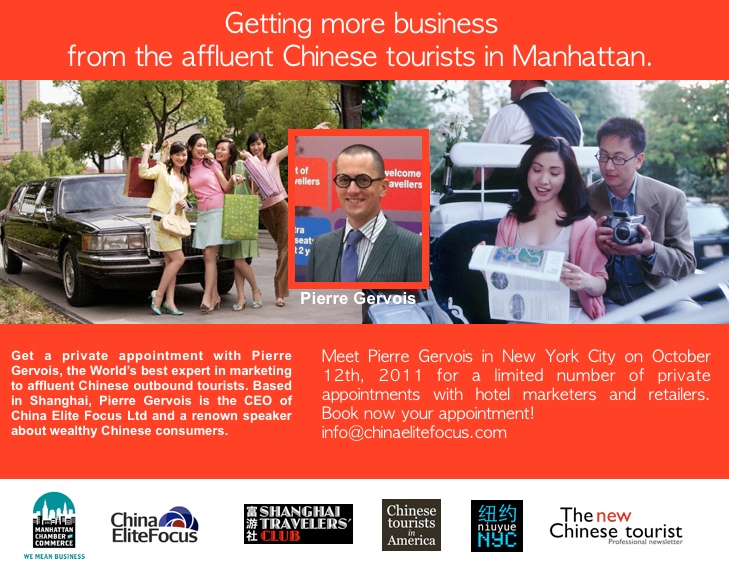
Pierre Gervois will be in NYC on Oct 11th & 12th for a series of lectures and meetings with U.S. travel professionals
Filed under New York
U.S. hotels welcome Chinese business travelers
 Earlier this year, some 14,000 members of Amway China arrived in waves of 2,800 each for a series of meetings in Anaheim, Calif. — just one example, travel industry professionals say, of a growing number of Chinese business travelers flocking to the United States to meet with potential customers, study American business practices and attend conferences and trade shows.
In response, major hotel brands are starting programs to compete for the Chinese business. They are updating menus, hiring bilingual people for their staffs and even offering access to Chinese television stations, anticipating that the number of Chinese visitors will continue to grow in coming years.
“We see that in the past five years it’s grown rapidly,” said Yong Guo, president of the North America Chinese Entrepreneur Association. “You can see it from the travel volume, especially in the summertime. You can see it in the ticket prices.”
Mr. Guo said Chinese business travelers from diverse industries including pharmaceuticals, software development and green technology had contacted him and asked for introductions to potential partners. His member base of Chinese-American entrepreneurs has tripled in five years, he said.
In fiscal year 2010, the State Department issued nearly half a million visas to mainland-born Chinese nationals coming to the United States either for business or for a combination of business and pleasure, despite what can be an expensive, months-long process to obtain a visa. The Office of Travel and Tourism Industries said it expected a 232 percent increase in Chinese visitors over the next five years.
Marriott International, Hilton Worldwide and Starwood Hotels and Resorts are among the hotel management companies that are starting or have recently introduced initiatives to welcome Chinese travelers.
“We think we’re looking at about a 50 percent growth on an annual basis, and that will compound,” said Christie Hicks, head of global sales for Starwood. In addition to conference groups and trade show delegates, Ms. Hicks said, Chinese companies increasingly view the United States as an attractive destination for incentive travel. “When they look for that aspirational destination, North America is one that continues to grow.” Hawaii is one popular destination, she added.
In July, Starwood added touches intended to appeal to Chinese travelers at hotels in 19 cities around the world frequented by Chinese travelers. Bilingual staff members will be available to assist travelers with a limited grasp of English. Slippers and tea kettles are put in the guest rooms of Chinese visitors and are available upon request. Hotel and local sightseeing information is translated into Chinese. And restaurant menus were expanded to include Chinese fare like rice dishes and congee, a kind of rice porridge often eaten for breakfast.
Hotel companies are also betting that China’s growing domestic travel industry will increase bookings in the United States. “We’re expanding within China, so the recognition of the Hilton name was becoming increasingly strong,” said Andrew Flack, vice president of global brand marketing for Hilton Hotels & Resorts.
In August, Hilton introduced a welcome program in 51 hotels in 33 global destinations for Chinese travelers, including 22 hotels in the United States. Like Starwood’s program, Hilton’s has bilingual employees available to assist Chinese visitors, and places slippers and tea kettles in guest rooms.
Travelers also get a welcome letter in Chinese, access to Chinese-language television stations and a Chinese-style breakfast with items like congee and fried rice.
“Chinese government group travel has been taking place for many years, but what’s adding to that is individual business travelers that we’re more familiar with in the West,” Mr. Flack said. “We’re seeing more Chinese delegates attending more international association conferences.”
David Townshend, senior vice president for global sales at Marriott International, said that so far this year, “We’ve seen a 50 percent increase in the business, which is obviously a strong indicator not only of the potential but clearly of the future.” Within some Marriott brands, the growth is even more pronounced.
At the extended-stay TownePlace Suites brand, the bookings are up 112 percent over the same time, reflecting the longer duration of stays for Chinese travelers.
Mr. Townshend said Marriott tested a Chinese-style breakfast including fried rice, pickled vegetables and congee in a few markets and plans to introduce it across its brands at the end of the month.
American travelers may be accustomed to a cup of coffee, perhaps accompanied by a room-temperature pastry, for breakfast. But the morning meal is a much more important one in Chinese culture, said Greta Kotler, chief global development officer at the Center for Association Leadership, or ASAE, an organization for managers of trade and professional associations.
“Breakfast in China is a very nutritious, green meal,” she said. “It’s very much more of a vegetable-rich breakfast than ours might be.”
Joseph Chi, president of Shine Tours, who helped coordinate the Amway China trip, said the company had detailed requirements for what it considered a “suitable breakfast” for delegates.
Hotel companies expect their efforts to connect with Chinese visitors will improve their standing among domestic travelers, as well. “I think we definitely have research that shows that customers look positively on hotel companies that are sensitive to the needs of travelers from multiple countries,” said Mr. Flack, of Hilton.
“There’s a sophistication that goes with that and a worldliness that talks to a high level of hospitality.”
After all, at the end of a long day, an American guest also might like to ease into a pair of slippers or make a cup of tea.
Filed under USA
Only 5% of US hotels websites have a Chinese version
 Chinese travelers are visiting the United States in increasingly large numbers -and will continue to do so- according to two recent NTA reports.
The majority of Chinese tour operators confirmed that bookings to the United States increased, by an average of 16 to 20 percent, in the second quarter of 2011, as reported in the China Travel Trade Barometer. None of the surveyed operators reported a decline. The Barometer, produced quarterly by NTA, in partnership with Travel Market Insights and Ivy Alliance, captures input from top Chinese travel firms that promote and sell travel to the United States.
This increase is in line with an NTA report of its China Inbound Program. Based on a survey of U.S. tour operators registered with the program, which serves Chinese leisure group travelers visiting the United States, the number of tourists during the first quarter of 2011 was 99,752. Prior to the 2010 opening of the NTA Visit USA Center in Shanghai, a baseline of 46,709 leisure group travelers visited the United States during the second quarter of 2010. The baseline was established to monitor the progress of the NTA Visit USA Center and inbound travel from China to the United States.
“The increase of travelers served by tour operators in the NTA China Inbound Program essentially doubled,” said Lisa Simon, NTA president. “And those visitors represent nearly $600 million in travel and spending on U.S. lodging, food, entertainment and shopping.”
The Department of Commerce estimates that every Chinese visitor spends an average of more than $6,000, including airfare with U.S. carriers. In 2010, 802,000 Chinese travelers visited the United States, which includes all travelers from China, not just those calculated by the NTA China Inbound Program.
According to China Elite Focus, a marketing and research agency based in Shanghai, “only 5% of U.S. hotels and 3% of US retailers have a Chinese version of their website. There is a huge, untapped potential, to convince more affluent Chinese tourists to discover the US for leisure trips”
And continued growth is on the horizon, according to the China Travel Trade Barometer. Nearly all Chinese tour operators surveyed (92 percent) project an increase in 2011 third-quarter bookings from China to the United States. And for the fourth quarter of 2011, 77 percent of operators project bookings to be higher, with only 8 percent anticipating a drop from the same period in 2010.
Filed under USA
Thanks to affluent Chinese tourists, American luxury retailers get robust profits
 Jewellery-hungry Chinese tourists fuelled a surge in US sales at Tiffany this summer, helping the luxury retailer produce robust second quarter profits in spite of a weak economic backdrop.
Tiffany raised its annual earnings outlook on Friday as customers shrugged off economic concerns and continued to purchase its luxury items. The company’s second-quarter performance exceeded the expectations of Wall Street analysts and its shares jumped 7.51 per cent to $67.85 in early trading in New York.
“We are extremely pleased by these results which confirm the growing global appeal of Tiffany’s product offerings,” Michael Kowalski, Tiffany chief executive, said. “We have been able to absorb precious metal and gemstone cost increases while improving our gross and operating margins.”
Outside the US, fears about weak demand were unjustified. Sales in Japan, which was battered by an earthquake and tsunami in March, rose 21 per cent from a year ago. Europe, where many consumers have been hit by government spending cuts, also showed strong growth with sales climbing 32 per cent.
Sales in the Americas rose 25 per cent from a year ago, while sales in Asia were up 55 per cent .
In the US, Tiffany said that more than half of the sales increase was due to increased spending by foreign travellers, led by Chinese tourists. Sales of items priced above $20,000 and $50,000 showed “notable strength”, the company said.
“We were bracing for pockets of weakness, little indications of the macro story coming home to roost in a retailer than has been on fire for longer than a year,” said Brian Sozzi, retail analyst at Wall Street Strategies. “At the moment, we are hard pressed to find negative aspects to the quarter, only a bunch of interesting positives.”
“We have monitored the needs of wealthy Chinese tourists in the U.S. for the last two years and the first items they buy during their leisure trip in the U.S. are high end jewels and watches. This is a very good news for the American luxury retail industry”, said Pierre Gervois, CEO of China Elite Focus.
Paul Lejuez, retail analyst at Nomura, said that the 41 per cent year-on-year sales increase at Tiffany’s flagship store in New York was the largest since 1990, when he began tracking the company. Calling their sales “off the charts”, he said that Tiffany, which operates 236 stores around the world, could probably increase its prices further without suffering a significant sales slowdown.
“There certainly are a lot of people out there with a lot of money who are looking to spend it,” Mr Lejuez said. “People look at their merchandise as having some innate value, and that goes a long way.”
“Despite continuing economic uncertainty, our strong first-half performance gives us ample reason to remain confident about our prospects for the balance of the year,” Mr Kowalski said.
Source: Financial Times
Filed under New York
American Travel Marketers Aren’t Prepared for Flood of Affluent Chinese Tourists
 Global hotel chains, airlines and luxury retailers can expect tens of millions of new customers from China in the coming years, but few Western companies are prepared for this influx or have a clear understanding of exactly what Chinese tourists require and expect for their yuan. In the United States, where one million Chinese tourists will arrive in 2011 to visit the country for leisure trips (and with an average of $6,000 in their pockets ready to be injected in the Nation’s economy), very few travel marketers are ready for that.
The growing number of affluent Chinese travelers “will completely change the face of tourism,” especially in hot destinations such as New York, Las Vegas, London and Paris, said Pierre Gervois, president-CEO of China Elite Focus, which specializes in affluent Chinese outbound tourism. “There will be an influx of wealthy travelers.”
China will overtake Japan as the world’s second-biggest tourism market by 2013. Sixty-six million Chinese will travel overseas this year — a 15% increase over 2010 — and that number is expected to reach 100 million by 2020, according to the World Tourism Organization.
Just a few years ago, few Chinese went further than shopping excursions to Hong Kong or gambling junkets to Macau organized by budget tour group operators. Today, Chinese tourists are more likely to be affluent independent travelers looking for customized experiences along with the comforts of home.
“Everyone stands to benefit because the Chinese market is growing so fast,” said Bruce Ryde, general manager of InterContinental Hotels’ Hotel Indigo Shanghai on the Bund, who appeared on this week’s episode of “Thoughtful China,” a video program produced in China.
But the global travel and tourism industry doesn’t understand these travelers yet. “The biggest issue is language,” Mr. Ryde said. “The Chinese traveler appreciates and needs a certain amount of translation [when] it comes to menus, hotel information and just general conversation. There needs to be some preparation.”
“The most important thing the hotels need to be thinking about is understanding and tapping into the cultural differences, and ensuring they understand what’s important to Chinese travelers,” said Gary Rosen, who recently resigned as senior VP and head of global operations for InterContinental Hotels Group.
Some hotel and retail chains have started to tap into this market. This summer both Hilton and Starwood introduced touches aimed at Chinese travelers such as stocking instant noodles, Chinese teas and tea kettles in mini-bars, offering Chinese TV channels and slippers in guest rooms, and serving congee (hot rice porridge) and dim sum at breakfast.
Food is especially important. Don’t be surprised, Mr. Gervois said, if Chinese tourists, both rich and poor, prefer instant noodles in the room over local cuisine.
Hilton and Starwood have also translated corporate websites, welcome letters and local sightseeing information into Chinese and hired dedicated front desk staff fluent in Mandarin.
The goal is to make them feel at home the same way Western hotel chains cater to Western travelers in Asia, said P.T. Black, “Thoughtful China’s” senior creative director in Shanghai. “If a hotel can provide Americans with a hamburger in Hanoi, then Chinese should get noodles in Nice.”
Luxury retailers and top tourism destinations such as the Louvre in Paris have followed suit. Many Chinese still don’t have Western credit cards, for example, so Harrods in London brought in 75 UnionPay machines “so Chinese can use their own local cards to get money out,” said Chloe Reuter, a luxury retail specialist based in Shanghai.
While Western companies struggle to adapt to Chinese travelers, Asian firms are trying to expand, such as Hong Kong-based Shangri-la Hotels & Resorts, which recently opened a five-star property in Paris.
“All the luxury hotels in Paris are really worried,” Mr. Gervois said. Their owners realize Shangri-la “knows exactly how to talk to wealthy Chinese travelers, what kind of food they expect, what kind of service they expect. I think Chinese brands with a lot of quality and content will really have big success expanding abroad.”
Foreign companies should also be working harder to provide online product information and reservation options in China, which has over 400 million internet users, Ms. Reuter said. There’s a missed opportunity for a global travel portal that curates news and information, she said. “Chinese spend hours, if not days, searching for information about where they want to go [but] no one is telling people, here’s your Chinese-language app for where you need to go shopping in Paris.”
Article by Normandy Madden, senior VP-content development, Asia/Pacific at Thoughtful China, and Ad Age’s former Asia editor. See earlier episodes of Thoughtful China here.
Chinese tourists in NYC are also investors in Real Estate
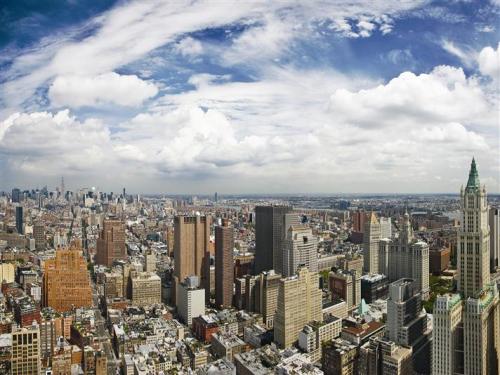 Chinese banks have poured more than $1 billion into real estate loans in New York City in the past year. Investors from China are snapping up luxury apartments and planning to spend hundreds of millions of dollars on commercial and residential projects like Atlantic Yards in Brooklyn. Chinese companies have signed major leases at the Empire State Building and at 1 World Trade Center, which is the centerpiece of the rebuilding at ground zero.
Delegations of Chinese officials and executives have been sweeping through the city, on a nearly weekly basis, assessing the markets, searching for office locations and meeting prospective partners and clients. Last month, officials and executives from China and the United States filled a ballroom at the Waldorf-Astoria to make deals during a business conference.
“Everybody wants to come to New York because New York is the starting point for going global,” said Xue Ya, president of the China Center, a business and cultural organization that was the first tenant to sign a lease at 1 World Trade Center, where it will occupy six floors. Once established in New York, Mrs. Xue said, “you are a player.”
Even one of the region’s fastest growing construction companies is Chinese. The company, China Construction America, has won contracts on major public works projects, including the Tappan Zee and Alexander Hamilton Bridges, the No. 7 subway line extension and the $91 million Metro-North Railroad station at Yankee Stadium.
China Construction is a subsidiary of a state-controlled construction company in China. The wave of Japanese investment in the city a generation ago — epitomized by the purchase of a controlling stake in Rockefeller Center by the Mitsubishi Estate Company of Tokyo in 1989 — stirred anxiety and even xenophobia. Some New Yorkers saw it as evidence that the city and the country were losing their dominant positions.
This time, city officials are welcoming Chinese investment as a boon to the local economy. But in a report in May, the Asia Society and the Woodrow Wilson International Center for Scholars warned that on a national level, protectionist impulses and anti-China sentiment, particularly in Washington, could scare away investors.
Flush with capital from its enormous trade surpluses, China has been on an investment spree, especially in developing countries. While the size of China’s investments in the United States pales in comparison with investments by other countries, it has nevertheless been growing rapidly.
In one of the largest loans by a single lender in the city since 2008, the Bank of China lent $800 million late last year to refinance a building on Park Avenue housing JPMorgan Chase and Major League Baseball, analysts said. Among other deals, the Bank of China recently agreed to lend more than $250 million to refinance an office tower at 3 Columbus Circle.
Tourism from China is booming in New York as well, helping to sustain the hotel, restaurant and retail sectors. In 2010, 266,000 Chinese people visited the city, a 45 percent increase over 2009, according to NYC & Company, the city’s tourism arm.
Pierre Gervois, president of China Elite Focus, said that “Five star hotels and luxury retail stores in Manhattan are suddenly realizing that they have no strategy to attract wealthy Chinese tourists. They turn to us to understand better this very sophisticated clientele”.
High-end real estate agents are doing their best to accommodate the influx.
Pamela Liebman, president of the Corcoran Group, said her firm had fielded a “huge” increase in inquiries from wealthy Chinese looking for luxury residential properties, “some in the $30-million-plus range.”
“We went from zero to 200 miles per hour in six months,” she said. “This year, it’s the biggest buzz word in real estate: ‘Chinese.’ ”
Xiaolan Shang, an agent with Prudential Douglas Elliman, said that five years ago, she had very few international clients. Now, about 90 percent of her client base is Chinese — and most pay in cash.
“I’ve had people come to New York only for the weekend,” Ms. Shang recalled. “They see the apartment, they make the offer and right away they fly back to China.” “Cash deal,” she added. “Right away.”
Source: New York Times, article by Kirk Semple
Filed under New York
New direct flights from Shanghai to Honolulu
 Hawaii’s tourism industry is excited about the first direct airline flights between Honolulu and Shanghai, which crack the door open to a new, potentially explosive growth market. The promise remains stymied, however, by the difficulty in Chinese travelers obtaining U.S. visas.
Of the 7.4 million visitors to Hawaii, only 56,000 came from China. That should increase with the new twice-weekly service between Shanghai and Honolulu by China Eastern Airlines — but could grow even more, were it not for the visa difficulties. Unlike Japan and South Korea, China does not qualify for visa waivers, and obtaining visas to the U.S. is cumbersome.
At most of the 222 overseas posts that the U.S. State Department operates, the wait time for in-person interviews is less than a week. The average wait time at the five posts in China is 48 days, including 64 days in Shanghai and 60 days in Beijing, according to the State Department.
“It’s a challenge,” said Mike McCartney, executive director of the Hawaii Tourism Authority. “We’re hopeful because the first set of charters that came over worked through that.”
“It’s a barrier, we know that,” said Angela Vento, Hawaii director of marketing and sales for Starwood Hotels & Resorts. “Until there’s a visa waiver, I think there’s still going to be limitation on travel. But the commitment that China Eastern has made, and the wholesale partners that are there to start this charter flight, we believe is a first step.”
Visa waivers, which allow visitors to travel to the U.S. for up to 90 days without having to obtain a visa, are based on the rate of refusal of a country’s visa applications. Those with refusal rates of 3 percent or lower qualify for visa waivers. The refusal rate of Chinese visa applicants has reduced from 24.5 percent in 2006 to 15.6 percent in 2009 to 13.3 percent last year, a rapid decline but still a long way to 3 percent.
“I think it’s a long process, and I think we’ll advocate that it’s an important step,” Vento said.
“It’s a complex situation and our State Department is on it,” McCartney said. “Over time, I think it’ll free up and get better, but in the beginning it is a very challenging process.”
The Travel and Tourism Advisory Board, a newly created 30-member industry group appointed by the U.S. secretary of commerce, recommended in February that the cutoff refusal rate should be raised to 10 percent. That could be attainable by China in a short time if its refusal rate continues to decline.
The advisory board recommended various measures to allow increased visitors to the U.S. by travelers from China. They include:
» Establish a maximum wait time of five days for in-person interviews for visas.
» Add four to six visa processing locations and a few hundred officers to process visas. It is estimated that one visa processing officer generates $1.5 million in fees a year, based on a fee of $140 per visa application.
» Allow non-immigrant visas lasting 10 years for Chinese visitors, which has been allowed in other countries.
“I absolutely support them (the recommendations) and I think we have an opportunity, especially with the new travel board,” McCartney said. “It’s the first time the United States has a board of this government caliber that can knock on the government on our end and their end, as opposed to individual states.”
“The new generation of affluent Chinese tourists coming to Hawaii since 2009 are generally Chinese businessmen, with a high personal income and a strong desire to spend money in Shopping in Hawaii’s luxury retailers”, said Pierre Gervois, CEO of China Elite Focus and a well known expert in destination marketing to Chinese tourists.
Sen. Mark Kirk, R-Ill., and Rep. Mike Quigley, D-Ill., have introduced legislation, the Secure Travel and Counterterrorism Partnership Act, that would use a country’s rates of overstaying visas in the U.S. instead of visa refusal rates. McCartney said he supports the measure, and President Barack Obama endorsed it in a letter to Congress in May as he visited Poland, which seeks membership in the visa waiver program.
“Using visa refusal rates as a primary requirement for admission is not a good way to determine whether a traveler represents a security, law enforcement or illegal immigration risk,” according to Jena Baker McNeill, a policy analyst of homeland security for the conservative Heritage Foundation. The overstay rate among countries with visa waivers is about 1 percent.
“We are all looking at this as an economic issue rather than a diplomatic or a security issue,” said Marsha Weinert, Hawaii’s tourism liaison during the Lingle administration. “You have different federal agencies that look at it a little differently.
Filed under Hawaii
Travel industry wants U.S. to ease visa rules for Chinese tourists
 The Statue of Liberty might “lift my lamp beside the golden door,” but American tourism officials say too many foreign visitors are finding that door locked when they try to come to the United States.
The U.S. Travel Association, the lobbying arm of the tourism trade, has launched a drive to persuade the American public and its elected leaders that it’s time to ease back on restrictions on foreign tourists. But it may be a quixotic campaign in the run-up to an election year when illegal immigration and terrorism are front-burner issues
The wealthy family from China who wants to come to Los Angeles on a shopping spree because of the weak dollar has little in common with the illegal immigrant crossing the border from Mexico. But safeguards to stop illegal entry sometimes end up snaring just the tourist.
Those bent on illegal activity will try to find ways around the roadblocks. The legal visitor likely will go somewhere more welcoming. That’s a policy the country can ill afford during a major recession, according to the U.S Travel Association.
“As a nation, we’re putting up a ‘keep out’ sign,” said Roger Dow, president of the association, in a press statement this month.
The group said barriers to easy travel to the U.S. have kept out an estimated 78 million foreign tourists (and their wallets) from 2000 to 2010. Lifting many of the restrictions could pump $859 billion into the U.S. economy and add 1.3 million jobs, by the association’s estimates.
Dow’s group points out that most of the barriers are self-imposed and archaic. While Europe has mostly unified its immigration and customs, and countries around the world have dropped or streamlined visa requirements, the U.S. still requires millions of travelers to go through a sometimes long and laborious process to visit here.
As of May, there are 36 countries that are on the Visa Waiver Program – countries whose citizens are not required to get a visa to travel to the U.S. for vacations of 90 days or less. Most of the countries are in western and central Europe, with a smattering of highly developed Asian nations such as Japan, Singapore and South Korea. Australia and New Zealand are also on the list. Citizens of most of the other 150 or so countries around the globe have to get in line and fill out the paperwork.
But what the travel association sees as “unnecessary barriers on international visitors” are seen by advocates of tighter borders as a way to control who gets to visit the country and, equally important, to make sure they go home when their trip is over.
But with a sputtering economy and affluent Chinese travelers attracted by a historically weak dollar, the travel association thinks the time is right for reform. It will push its “Ready for Takeoff” plan, touting travel as the nation’s top export sector and one that is easy to expand. The group also knows how to hit the hot button. Job growth and tax cuts are mantras Americans can get behind. Foreign visitors are a way to fill tax coffers without raising taxes on Americans. It will create jobs for Americans to check them into hotels, rent them cars and serve them meals. “Chinese tourists coming to the US have a strong desire to buy made in USA products, this is a historical opportunity for the whole nation’s economy to attract more of these affluent tourists”, commented Pierre Gervois, CEO of China Elite Focus.
As part of the push, the association is re-energizing the Discover America Partnership, an umbrella coalition with associations representing hotels, restaurants, retailers and the U.S. Chamber of Commerce.

Connecticut needs more Chinese tourists
 Connecticut is courting Chinese tour directors in hopes of attracting some of the growing number of visitors from their country to help revitalize the state’s tourism industry.
During a visit in the past week by a group of Chinese tour operators, representatives of the U.S. Department of Commerce, U.S. Rep. Joe Courtney and others promoted southeastern Connecticut. That region is home to the Mystic seaport, Mystic Aquarium, two Indian-run gambling casinos and several vineyards.
The group of nine Chinese officials stayed at the Mohegan Sun hotel and visited Mystic and the shoreline town of Clinton. They also went to area vineyards and Westbrook’s malls.
Peter Glankoff, senior vice president at the Mystic Aquarium, said the region needs a boost. Tourism has been flat over the last 10 years due to the recession, the weak recovery and what Glankoff said has been a lack of investment in tourism in Connecticut.
He said the town of Mystic is one of the state’s strongest attractions and is among the leading brand names in New England tourism.
The town was founded in 1654 and became a shipbuilding center in the 19th century, during the clipper ship era. More recently, Mystic has become known for the Mystic Seaport, a prominent maritime museum, and the Mystic Aquarium, home to Robert Ballard, known for his discovery of the Titanic in 1985. The aquarium draws about 10 percent of its 700,000 visitors a year from overseas, Glankoff said.
“It’s OK, but the potential is much greater,” he said. Aileen Moriarty, sales manager at United Airlines, helped organize the visit as a way to promote visits to Connecticut from the airline’s route to Newark Liberty International Airport. Tourists can take the train or bus from northern New Jersey to Connecticut.
Most tourists bypass Connecticut in favor of New York and Boston, she said. The Connecticut itinerary got the attention of tour operators as an alternative to other U.S. destinations, she said. “Most international travelers have already seen New York, Los Angeles and Boston,” Moriarty said. “They’ve gone to the main attraction.”
Tourism from China to the United States is relatively small. Chinese tourists ranked No. 9 in visitor spending with $3.5 billion in 2009, but the numbers are rising quickly, according to the U.S. Commerce Department. According to Pierre Gervois, CEO of China Elite Focus, a PR agency specialized in helping destinations to attract more Chinese tourists “The US are #1 dream destination for most of Chinese tourists. As the tourist visas are gradually easier to obtain, the U.S. CVB’s should get ready to welcome a growing number of affluent Chinese visitors”.
Connecticut’s economic development officials don’t expect quick results from the tour by Chinese officials. “It’s not instant, instant gratification,” Evans said. “Maybe we’re taking a few (tourists) that are going to Florida or the Cape or San Francisco or Canada. Maybe we’re taking a little from there and some new people.”
Filed under Connecticut








 Chinese tourists in America